

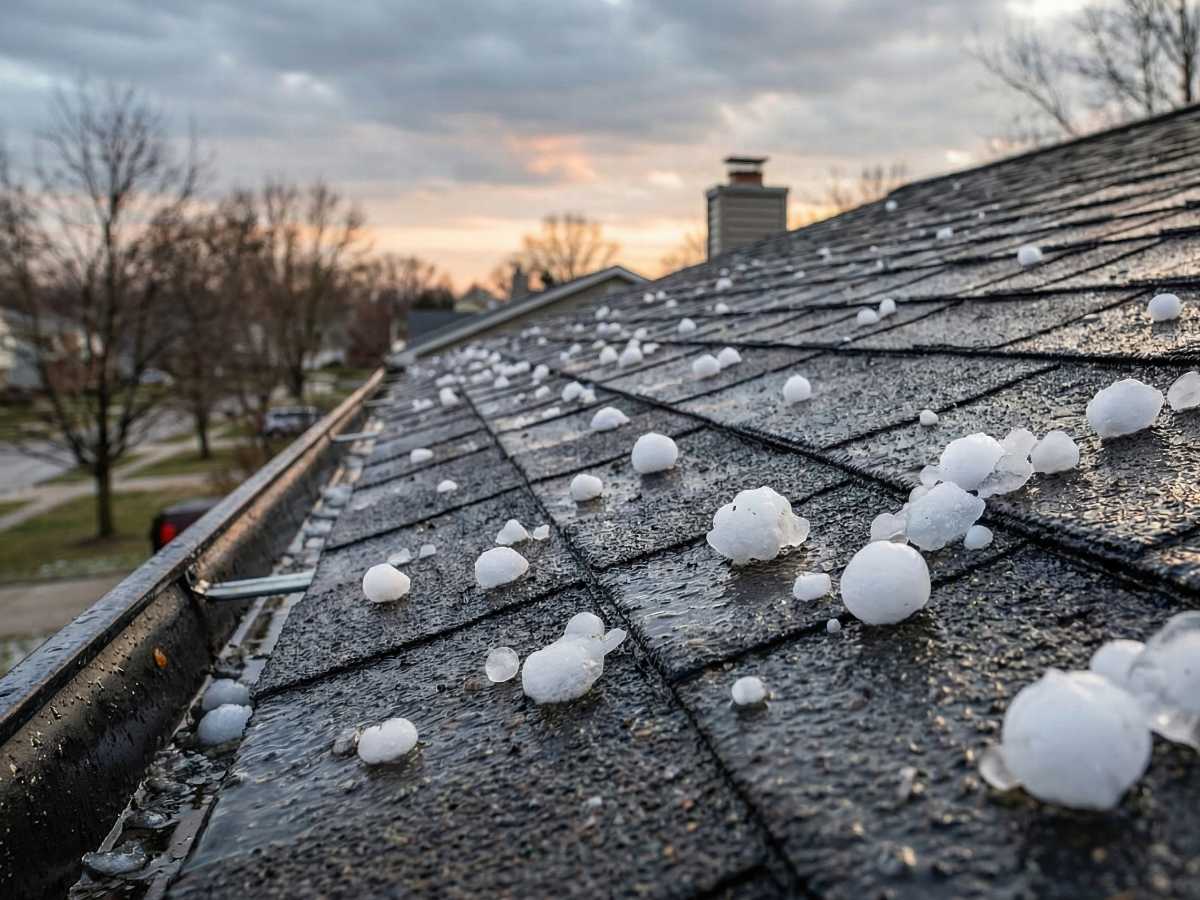
Eavestroughs tend to get ignored until something goes visibly wrong. They sit above eye level, they do their job quietly for years, and most homeowners only think about them when water is pouring over the edge during a storm. By that point, the system has usually been struggling for a while.
Fall is the right time to look closely, because winter is unforgiving to a weakened eavestrough. Once snow loads build and meltwater refreezes overnight, a loose hanger or a separated seam turns into a much larger repair. Here are the seven signs Simcoe County homeowners should be watching for before the cold sets in.
1. The Eavestrough Is Sagging Between Hangers
Stand back from the house and look along the length of each run. A healthy eavestrough follows a straight line with a consistent, gentle slope toward the downspout. If you can see a dip or a wave in the middle of a run, the hangers holding it up are no longer carrying the load evenly.
Sagging usually means the fasteners have loosened in the fascia board, or the spacing between hangers was too wide to begin with. It matters more than it looks, because a low spot holds standing water. That water adds weight, accelerates corrosion at the seams, and freezes into a block of ice that pulls the run down further.
The Fix
In many cases the run can be relifted and refastened with additional hangers, provided the fascia behind it is still solid. If the wood has softened, the fascia has to be addressed first, since new fasteners will not hold in compromised material. A proper repair resets the pitch at the same time so water actually moves toward the outlet.
2. The Eavestrough Is Pulling Away From the House
A visible gap between the back of the eavestrough and the fascia board is a more urgent version of the same problem. Water running down the roof no longer lands cleanly in the trough. Instead it slips behind the system and runs directly down the fascia, the soffit, and often the wall below.
This is one of the fastest ways to turn an eavestrough issue into a structural one. Water trapped behind the trough sits against wood that was never meant to stay wet. Left through a Barrie winter, that wood goes from damp to rotted, and the repair grows from a fastening job to a fascia replacement.
The Fix
The system needs to come down along the affected run so the condition of the fascia can be assessed properly. Sound board gets new hangers at correct spacing and the trough is reset tight to the house. Damaged board is replaced before anything goes back up, because refastening to rot only buys a season.
3. Water Is Staining the Fascia or Soffit
Dark streaks running down the fascia, or brown staining on the underside of the soffit, are a record of where water has been going. The eavestrough is either overflowing at that point, leaking through a joint, or letting water travel behind it. The stain tells you the location even when the leak is not happening while you are looking.
Pay particular attention to staining near corners and at the ends of runs, since those are where seams and end caps sit. Staining on the soffit is worth acting on quickly. Soffit panels are part of the attic ventilation system, and once they are saturated repeatedly, the moisture problem moves inside.
The Fix
Finding the entry point matters more than sealing the stain. A repair addresses the failed joint, end cap, or fastener that let water escape, then confirms the run drains cleanly under a hose test. Stained panels can be assessed separately once the source is dry.
4. Seams and Corners Are Leaking
Sectional eavestrough systems are joined at intervals, and every joint is a potential failure point. Sealant at those joints has a service life. It becomes brittle, shrinks away from the metal, and eventually opens a path for water. Corners and mitres are usually the first to go because they take the most movement.
Ontario winters accelerate this. Metal expands and contracts through freeze and thaw cycles, and sealant that was flexible when it went on eventually stops keeping up. A drip that seems minor in October becomes an ice column against the wall in January.
The Fix
Individual joints can often be cleaned, resealed, and returned to service. When a system is leaking at several seams at once, the sealant across the whole run is usually at the same age and condition, and repairing one joint at a time becomes a recurring visit. That is the point where a seamless replacement run is worth considering, since a continuous length removes the joints entirely.
5. Fasteners Are Backing Out of the Fascia
Look for spikes or screws that stand proud of the front lip of the eavestrough, or for heads that have worked their way loose. Older systems used long spikes driven into the fascia, and those loosen naturally over years of expansion, contraction, and load.
Once a fastener backs out, the section it was holding starts to move independently of the rest of the run. That movement stresses the joints on either side, which is why loose fasteners and leaking seams so often show up together. It is also why a system can seem to fail all at once when it has actually been declining gradually.
The Fix
Modern hidden hangers grip the front lip and screw into the fascia, which holds far better than a spike through the face of the trough. Converting a run to hidden hangers during a repair generally solves the recurring loosening rather than resetting the clock on it.
6. Water Is Pooling Against the Foundation
Walk the perimeter of the house after a heavy rain and look at the ground under each downspout. Soil that is washed out, mulch that has been pushed away, or a puddle that lingers all point to water being discharged too close to the house.
This is an eavestrough problem even though the symptom appears at ground level. The system did its job across the roof and then released the water in the wrong place. Through freeze and thaw, that saturated soil expands and contracts directly against the foundation wall, and in spring it becomes the most likely path for water into a basement.
The Fix
Downspouts need to discharge far enough from the wall that water moves away rather than soaking in, and the grade has to carry it there. Extensions, relocated outlets, or an additional downspout on an overloaded run all address this depending on the layout. Our post on downspout drainage covers this in more detail.
7. Granules and Debris Are Collecting in the Trough
Scoop a handful out of the eavestrough and look at what is in it. Leaves and twigs are expected. A layer of small dark granules that look like coarse sand is shingle material, and finding a significant amount of it means the roof surface above is wearing.
This does not mean the eavestrough itself has failed, but it changes what the system is dealing with. Granule buildup packs down into a dense sludge that holds water, blocks outlets, and is much harder to flush than leaf debris. It is also a useful early warning about the roof, which is worth knowing before you invest in the eavestroughs below it.
The Fix
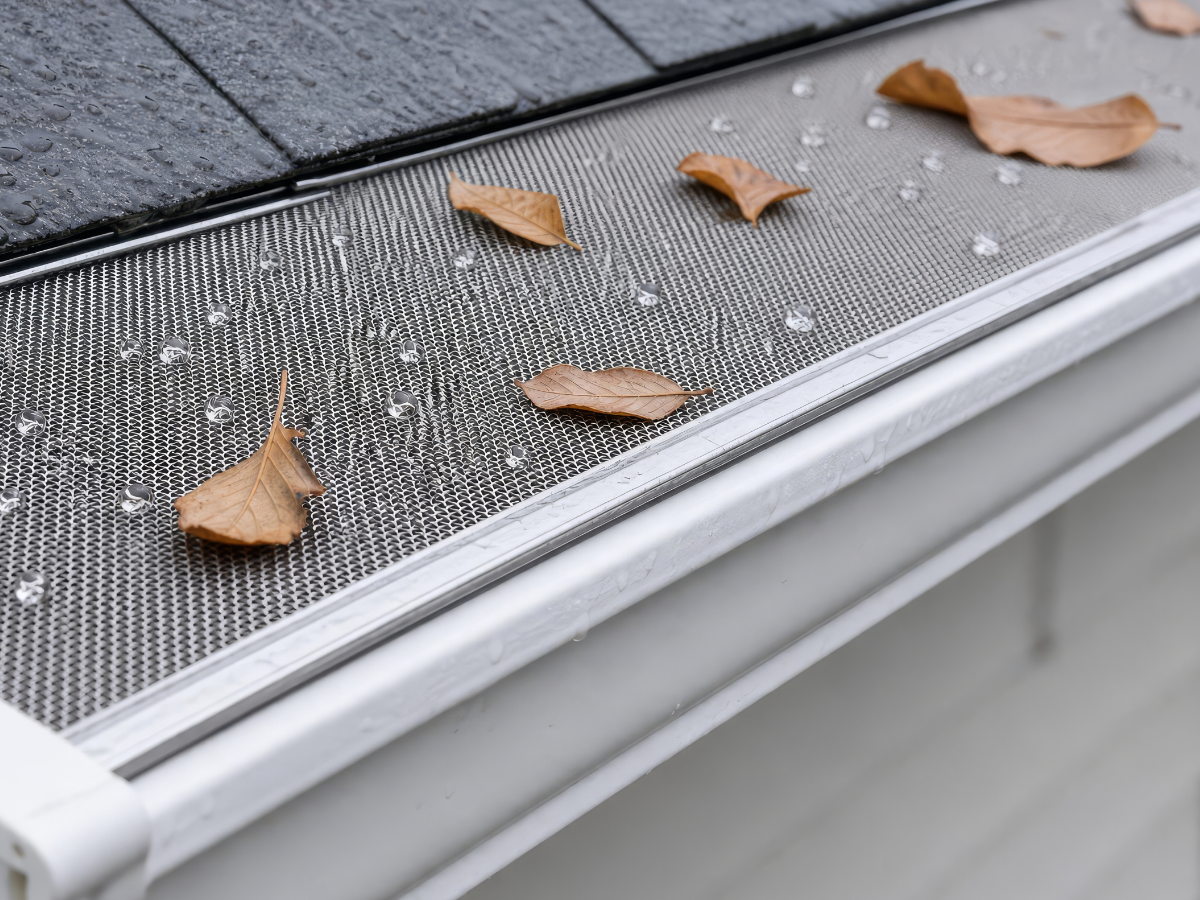
The trough needs a thorough clean rather than a rinse, since packed granules do not move with water pressure alone. It is also worth having the roof condition considered as part of the same visit, so the sequence of any upcoming work makes sense. Gutter protection can reduce debris accumulation, though it is not a substitute for addressing a roof that is shedding heavily.
Why Timing Matters in Simcoe County
Every one of these issues gets worse under snow and ice rather than better. A trough that sags slightly in October holds meltwater in December, freezes solid overnight, and carries several times its designed weight by January. Fasteners that were merely loose let go. Seams that were seeping open up. Fascia that was damp becomes rot.
The window for straightforward repair is now, while the system is dry, accessible, and holding nothing heavier than leaves. Work done in fall is almost always smaller in scope than the same problem addressed in spring, because winter is what turns a fastening issue into a replacement.
At Reynolds Brothers, we assess and repair eavestrough systems throughout Barrie, Innisfil, Orillia, Oro-Medonte, Springwater, Wasaga Beach, Collingwood, Essa, Ramara, Severn, Newmarket, and surrounding communities. If you have noticed any of these signs on your home, contact Reynolds Brothers at (705) 896-7859 for a professional assessment and quote before winter arrives.
Lorem ipsum dolor sit amet, consectetur adipiscing elit. Fusce quis bibendum ipsum.
.png)


.png)


