


Fascia Repair vs. Full Board Replacement: What Rotting Fascia Really Needs
Fascia has a thankless job. It's the board that runs along your roof edge, and it spends its life holding up your eavestroughs, capping off your rafters, and taking splash-back, ice, and sun year after year. When it starts to fail, homeowners face a question that sounds simple but rarely is: can this be repaired, or does it need to be replaced?
The honest answer is that it depends on what's behind the damage you can see, and that's exactly what this guide will help you figure out.
First, Know What You're Looking At
On most homes in our area, fascia is either wood (painted or clad in aluminum) or fully finished aluminum over a wood backer. That distinction matters enormously, because aluminum cladding can look perfect while the wood behind it quietly rots. Conversely, peeling paint on exposed wood fascia looks alarming but is sometimes only cosmetic.
The signs that something real is happening include paint that bubbles or peels repeatedly in the same spot, soft or spongy wood when pressed, visible rot or dark staining, sagging eavestroughs (the fascia is what they're fastened to, so when they droop, the board behind them is often the reason), gaps opening between the fascia and soffit, and evidence of pests, since squirrels and birds exploit softened fascia to get into attics.
When Repair Is the Right Call
Fascia damage that's genuinely localized can often be repaired sensibly. A section damaged by a specific event, one area of rot where a downspout splashed for years, or a spot where a ladder cracked the board doesn't necessarily condemn the whole run. A proper repair replaces the damaged length of board back to sound wood, addresses whatever caused the damage, and matches the cladding or finish so the repair disappears.
The key word is localized. Repair makes sense when the cause was a point problem and the rest of the fascia is genuinely sound, not just covered.
When Replacement Is the Honest Answer
More often than homeowners hope, visible fascia damage is the tip of something systemic, because the usual causes don't operate in just one spot:
Failed or undersized eavestroughs overflow along their whole length, soaking the fascia everywhere, not just where you noticed the peeling.
Missing drip edge or aging roof edges let water wick behind the fascia along the entire roofline.
Poor attic ventilation bakes and moistens the roof edge from behind, deteriorating fascia and soffit together.
If probing reveals softness in multiple spots, if past repairs keep failing, or if the board behind aluminum cladding crumbles when fasteners are removed, sectional repair becomes a game of whack-a-mole. Replacing the full runs, typically with new aluminum-clad fascia over sound backer, resets the clock on the whole roof edge and almost always costs less in the long run than repeated patch visits.
The Part Most People Miss: Fix the Cause or Repeat the Repair
Here's the pattern we see constantly: fascia gets repaired or replaced, looks great, and three years later the same rot is back, because the water problem that caused it was never addressed. Fascia doesn't rot on its own. Something is delivering water to it.
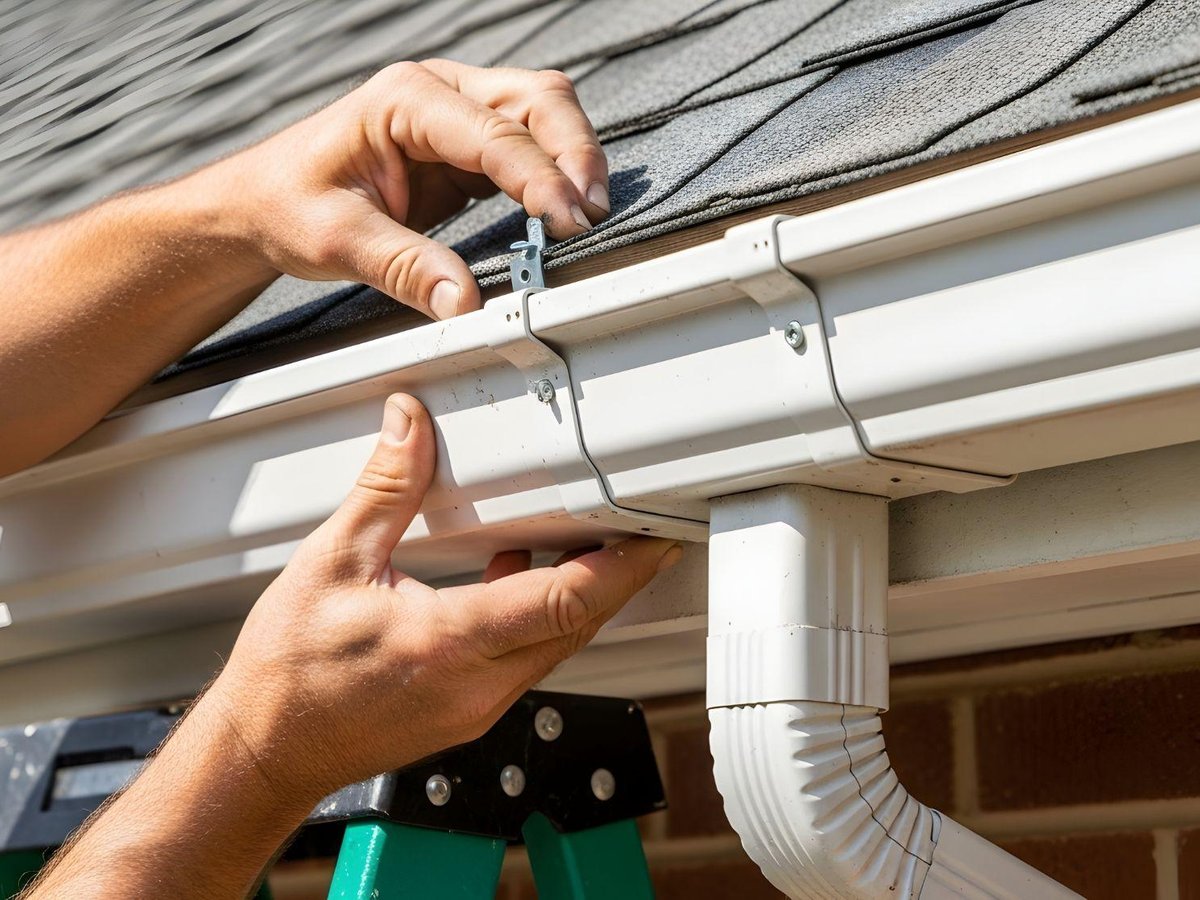
That's why a proper fascia assessment always looks at the system around it: whether the eavestroughs are sized, sloped, and sealed correctly, whether gutter protection would stop the overflow-causing debris (continuous hanger systems like Alu-Rex actually reinforce the fascia attachment while keeping leaves out), whether the drip edge directs water into the trough rather than behind it, and whether the soffit venting is keeping the roof edge dry from the inside. Replacing fascia without correcting these is renovating on a countdown timer.
Repair vs. Replace: The Quick Test
If the damage traces to one identifiable cause, covers a small portion of the total run, and the surrounding wood is sound, repair is reasonable. If the damage shows up in multiple places, the eavestroughs are aging along with it, or previous fixes haven't held, replacement of the affected runs together with the underlying fix is the better investment. And since fascia, soffit, and eavestroughs come off and on as a system, combining tired components into one project is the efficient path.
Reynolds Brothers Exteriors repairs and replaces fascia, soffit, and complete eavestrough systems for homeowners across Barrie, Innisfil, Orillia, Collingwood, Newmarket, Aurora, and throughout Simcoe County. Not sure whether your fascia needs a patch or a fresh start? Call us at 705-896-7859 and we'll give you a straight answer.
Related reading: How to Identify When It's Time to Replace Your Soffit and Fascia | Commercial Eavestrough and Fascia Projects: Why Property Managers Should Invest | DIY Soffit and Fascia Repairs: When It’s Safe to Try and When to Call the Pros | Signs Your Soffit and Fascia Need Repair or Replacement in Collingwood
Lorem ipsum dolor sit amet, consectetur adipiscing elit. Fusce quis bibendum ipsum.





.png)


