


Planning an Exterior Renovation: What Order Should the Work Happen In?
Most exterior renovations don't start as renovations. They start as a single problem: eavestroughs that overflow, siding that's faded past saving, fascia showing rot at the corners. Then the homeowner gets a quote, starts looking at the rest of the exterior, and realizes several components are all reaching the end of their life around the same time. Which raises a question that almost nobody addresses: if you're doing more than one thing, what order should it all happen in?
Sequence matters more in exterior work than almost any other kind of renovation. Done in the right order, each project protects the one after it. Done in the wrong order, you'll watch a crew remove work you paid for last year to do the job you should have done first. Here's the logic.
The Golden Rule: Work Top Down, Outside In
Water flows downhill, and your exterior sheds it in layers, each one handing off to the next. Renovation should follow the same path the water does.
The roof comes first. Reynolds Brothers doesn't do roofing, so take this as free advice with no sales pitch attached: if your roof is within a couple of years of replacement, do it before anything else. Roofers work at the roof edge, right where your eavestroughs, fascia, and the top of your siding live. New troughs installed before a roof replacement will spend that project full of shingle debris and ladder traffic. Get the roof settled, then move down.
Soffit and fascia come next. Fascia is the structural mounting surface for your eavestroughs, and soffit closes off the roof edge beside it. Installing new eavestroughs onto rotted or tired fascia means hanging a new system on a failing anchor, and it's the mistake we see most often when projects are done piecemeal. Because troughs have to come off to replace the fascia behind them properly, these two jobs are natural partners: refresh the fascia and soffit, then hang the new eavestroughs onto sound material. This is also the moment to fix ventilation, since vented soffit does its job for decades once it's in.
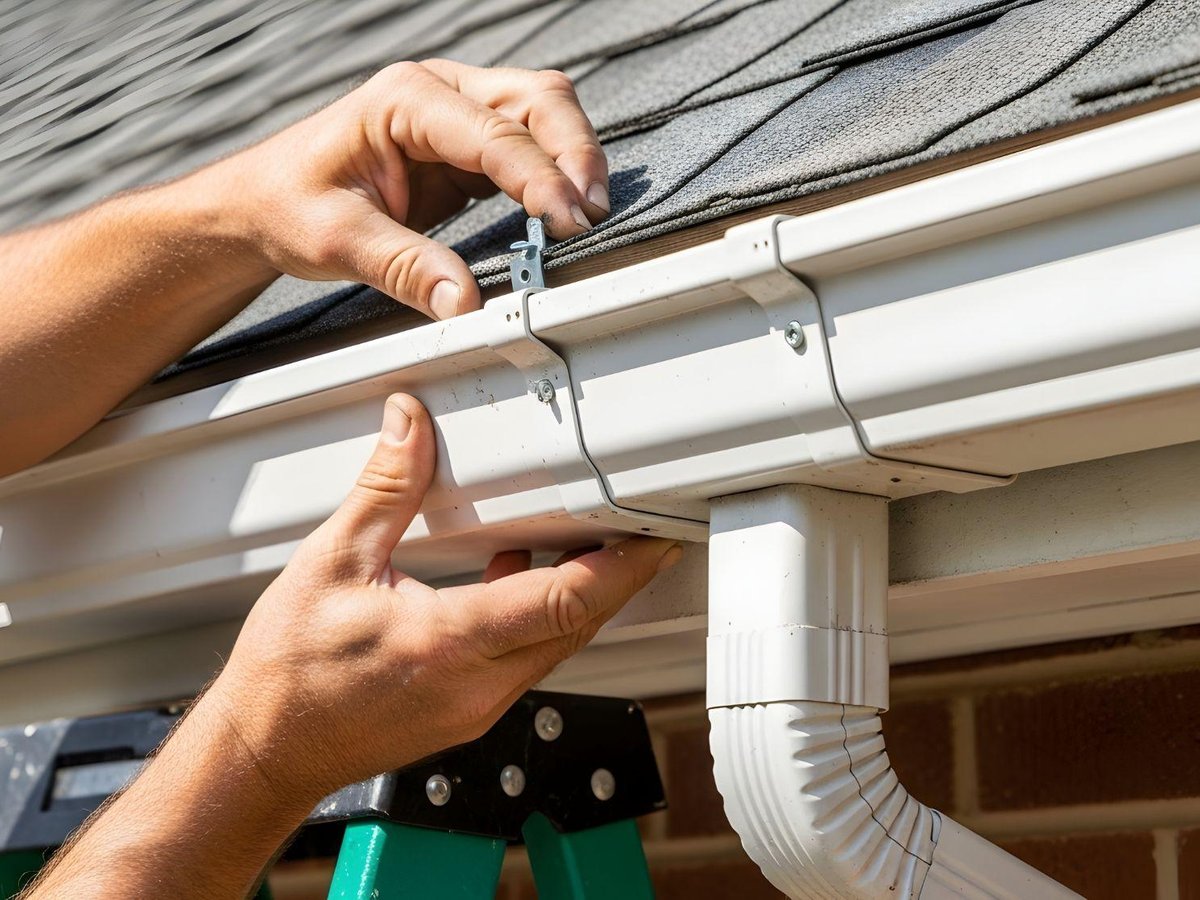
Eavestroughs follow immediately. With sound fascia in place, the new troughs, downspouts, and gutter protection go on. Continuous hanger systems like the Alu-Rex products we install actually reinforce the fascia along its full length, so the combination of new fascia and a continuous-fastened trough is dramatically stronger than either alone. From this point on, the rest of your renovation happens under a roofline that's managing water properly, which protects everything below it.
Siding comes after the roofline is done. Siding installation involves the junction where walls meet soffit, and the trim details at the top of every wall. With new soffit and fascia already in place, the siding crew finishes cleanly into fresh material instead of butting new siding against components scheduled for replacement. Doing it in reverse means the future soffit crew disturbs your finished siding lines.
Capping, trim, and details finish the job. Aluminum capping around windows and doors, final trim work, and touches like matching downspout placement to the new look are the last layer. They're also where the renovation stops looking like a series of repairs and starts looking like a transformation.
Can Things Be Combined? Absolutely, and They Should Be
The sequence above doesn't mean five separate projects across five years. The middle steps, soffit, fascia, eavestroughs, and siding, are one trade family, and combining them into one project has real advantages: one mobilization, one set of colour and material decisions made together so everything actually matches, flashing and junction details handled by one crew that owns the whole wall, and no finished work disturbed by the next phase.
The most common smart groupings we see are soffit, fascia, and eavestroughs as one package (the roofline refresh), or the full envelope of siding plus roofline in a single project when both are due. What we'd caution against is the reverse order in installments: new eavestroughs this year, fascia in two years, siding after that. Each later phase disturbs the earlier one.
What If One Component Fails Early?
Real life doesn't always cooperate with ideal sequencing. If your eavestroughs fail while the siding still has years left, replace the eavestroughs, and address the fascia behind them at the same time. The rule of thumb is simple: never install a new component onto a failing one, but don't replace healthy components just to satisfy a sequence. A good contractor will tell you honestly which situation you're in.
Colour and Design: Decide Once, Not Four Times
One underrated benefit of planning the exterior as a whole, even if the work phases over a couple of seasons: you choose your palette once. Siding colour, soffit and fascia finish, eavestrough colour, and capping should be decided together, because they're seen together. Homeowners who pick each element separately over several years often end up with an exterior that's new everywhere and coordinated nowhere. Decide the full look at the start, then execute in the right order.
Start With an Assessment, Not a Quote
The best first step for any multi-component exterior project is a walkaround with someone who works on the whole system. An honest assessment tells you what actually needs replacement now, what has life left, what should be grouped together, and what order protects your investment. From there, the plan writes itself.
Reynolds Brothers Exteriors handles complete exterior renovations, including siding, soffit, fascia, seamless eavestroughs, gutter protection, and aluminum capping, for homeowners across Barrie, Innisfil, Orillia, Collingwood, Newmarket, Aurora, and throughout Simcoe County. Planning a bigger exterior project? Call us at 705-896-7859 and we'll help you sequence it right, backed by seven straight years of HomeStars Best of Awards.
Related reading: Vinyl vs. Maibec Siding: Which Is Better for Ontario Homes?
Lorem ipsum dolor sit amet, consectetur adipiscing elit. Fusce quis bibendum ipsum.





.png)


